The first repair you attempt will tell you what your toolbox is missing. It is usually the same story: a loose cabinet hinge, a wobbling chair leg, a curtain rod that refuses to sit level. You reach for whatever is in the kitchen drawer, and the job takes three times longer than it should.
The good news is that the fix is small. Merriam-Webster defines essential as what is "indispensable, necessary," and that is the right filter for hand tools. A dozen careful purchases handle the large majority of household repairs. Everything else can wait until a specific job asks for it.
This guide ranks those tools in the order a new homeowner actually needs them, with notes on where spending more pays off and where it does not.
Which tools should you buy first?
Start with four: a claw hammer, a screwdriver set, an adjustable wrench, and a tape measure. These four cover hanging pictures, tightening hardware, assembling flat-pack furniture, and taking accurate measurements for almost any small project.
For the hammer, choose a claw hammer with a comfortable grip and a head heavy enough to drive a nail without effort, but light enough to control with one hand. The claw should be curved, so you can pull nails without levering against your wrist.
For screwdrivers, resist the temptation to buy one multi-bit driver and call it done. A basic set with both flat-head and Phillips heads in several sizes costs little and lasts decades. Multi-bit drivers are convenient, but a dedicated driver in the right size strips fewer screw heads.
The tape measure deserves more care than people give it. Look for a lock that holds the blade in place and a hook that slides slightly — that small movement accounts for inside and outside measurements, and it is why cheap measures give sloppy numbers.
What belongs in the second wave of purchases?
Once the basics are in place, add pliers, a utility knife, a level, and a set of hex keys. Each solves a category of problem the first four cannot.
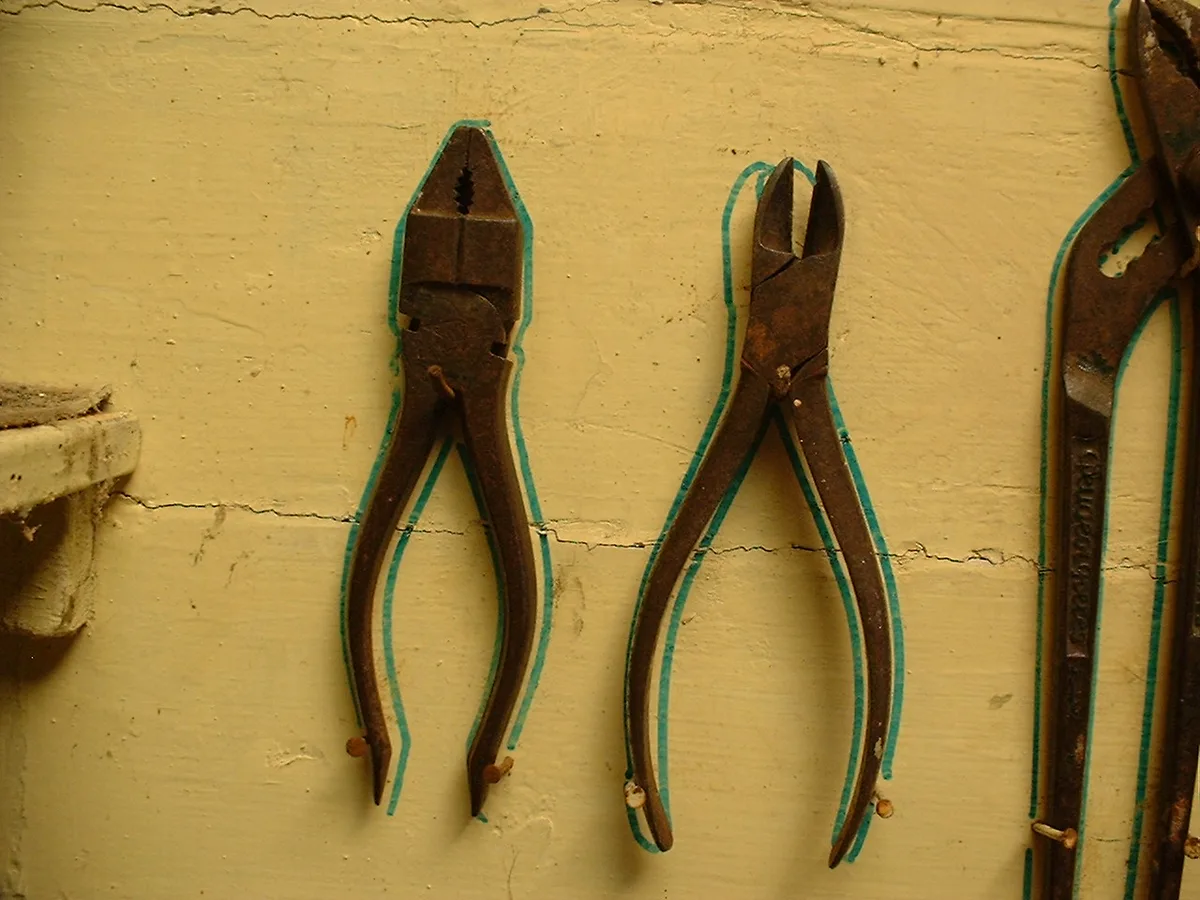
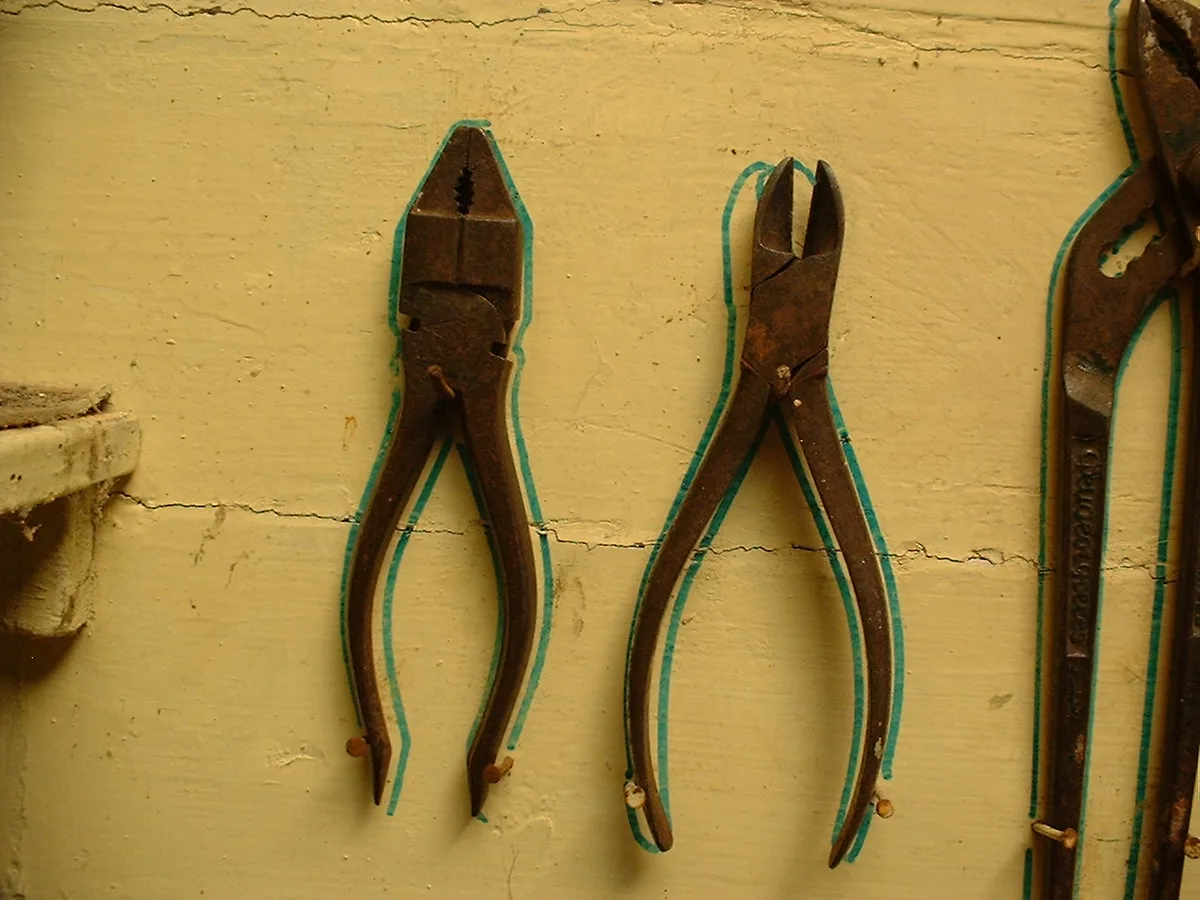
- Pliers. A pair of slip-joint pliers grips nuts, pulls staples, and bends wire. Needle-nose pliers reach into tight spots. Together they handle most gripping jobs.
- Utility knife. Opening boxes, trimming carpet edges, scoring drywall. Buy one with replaceable blades and keep spare blades on hand; a dull blade slips, and a slipping blade causes the injuries.
- Level. A small torpedo level fits in a drawer and settles whether shelves, frames, and towel bars are true. It ends the step-back-and-squint method permanently.
- Hex keys. Flat-pack furniture and many bicycle and appliance fittings use hex sockets. A folding set keeps the loose keys from wandering off.
This is also the wave where quality starts to matter more. A cheap level can be out of true straight from the factory, which makes it worse than no level at all. Test one against a known flat surface before trusting it, or buy from a maker with a replacement warranty. Readers following this should also see Sigil or the Calibre Editor: Which One Does Your EPUB Fix Need?.
Where does spending more actually pay off?
Quality tiers in hand tools are real, but they are not evenly distributed. Cutting and measuring tools reward spending; striking and prying tools mostly do not.
Spend up on the utility knife, the tape measure, and the screwdrivers. In each case, better steel holds an edge or a tip longer, and better ergonomics matter when a job runs long. A screwdriver with a handle that fits your palm turns a half-hour task from a chore into nothing at all.
Spend down on hammers and basic pliers. A mid-priced hammer from a established brand will drive nails every bit as well as a premium one. What you pay extra for in those categories is finish and brand name, not function.
Our analysis: buy the mid tier for most of the list, and reserve the top tier for the two or three tools you expect to reach for weekly. That rule keeps a starter kit affordable without filling it with tools that fail the second year.
What completes the dozen?
The last additions round out the kit: a handsaw or a compact saw for cutting, a stud finder for safe anchoring, a putty knife for scraping and filling, and a good work light. Add a sturdy pair of work gloves and safety glasses, because they are tools too, and the ones that protect the person holding the rest.
A stud finder deserves a special word. Anything heavy mounted on drywall — a television, a bookshelf, a wall-mounted radiator — needs to anchor into framing, not just the wall surface. Guessing risks both the object and the wall. An electronic stud finder is inexpensive and removes the guesswork entirely.
Storage matters more than most beginners expect. A simple toolbox or even a divided tote keeps tools from migrating around the house. The best tool kit is the one you can find in the dark, because that is often when you need it.
Practical steps for building the kit over time
Do not buy all twelve at once. Follow the repairs.
- Buy the first four before you move in, or in your first week: hammer, screwdrivers, adjustable wrench, tape measure.
- Add the second wave — pliers, utility knife, level, hex keys — within the first couple of months, as small jobs surface.
- Buy cutting, anchoring, and finishing tools when a project demands them, not before.
- Replace any tool that fails at the moment of failure, with a better version of that one tool. Upgrades earned by use are the ones that stick.
This staged approach costs less overall than a big-box starter set, and every tool in the drawer will have a reason to be there. If your taste in tools runs to the digital kind as well, our tools coverage follows the same philosophy of fewer, better choices — see, for example, our guide to Digital Tools to Grow Your Small Business, Chosen Carefully. And for readers whose workbench is a desk, our apps section applies the same selective standard to software.
The takeaway: fewer tools, chosen well
A dozen hand tools, bought in a sensible order, cover most of what a house will ask of you. The essentials are essential precisely because they earn their drawer space on every job — the dictionary sense of the word, fundamental and necessary, applies neatly here.
What the evidence in this guide cannot settle is your specific list. Your home, its age, and its quirks will reorder the dozen. Let the repairs decide, buy the mid tier by default, upgrade the tools you use weekly, and the kit will build itself around your actual life rather than a checklist written for someone else's.