
Because three different systems are fighting over the same fields: your library manager's metadata, the file's internal OPF metadata, and each store's own catalog record — and they don't sync. The fix is to edit metadata deliberately, in the right place, with the right tool. Calibre's Edit metadata dialog handles the library layer and can write changes back into the files; Sigil edits the OPF inside a single EPUB directly, per each project's documentation. Get title, author, series, cover, and ISBN consistent in both layers, and books stop misfiling themselves.
What metadata fields actually matter?
More than you'd think, and each one fails differently when wrong.
- Title and author: sorting order on devices follows these; "Pratchett, Terry" versus "Terry Pratchett" decides whether an author shelves as P or T.
- Series: a dedicated series field with an index (Book 1, Book 2) gives you in-order reading on devices that support it; free-text "Book 3 of the Unseen Universe" in the title gives you nothing.
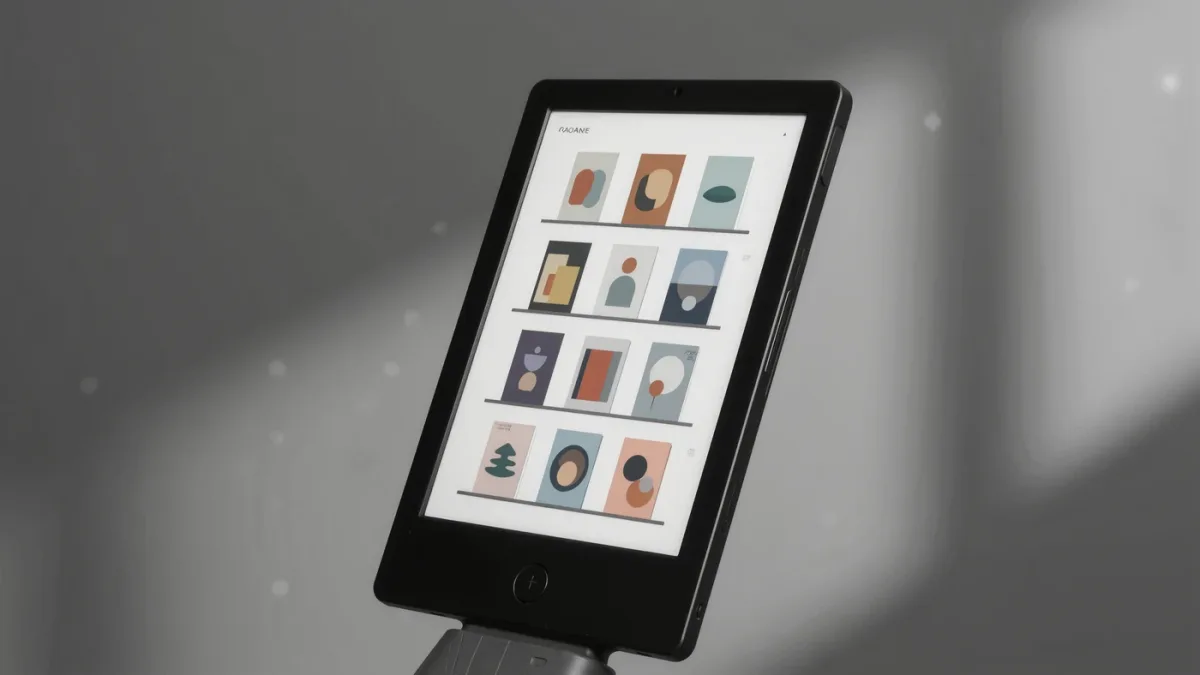
- Cover: a missing or low-resolution cover makes even a well-made book look broken on a shelf view.
- Language: wrong language breaks hyphenation and dictionary lookups on real devices.
- ISBN: the trade identifier that links your edition to retailers, libraries, and catalog systems — how institutions like the Library of Congress tie records together in their cataloging practice.
How do you fix covers properly?
In Calibre, the Edit metadata dialog sets or downloads covers, and per the project's documentation you can have the cover written into the e-book files themselves — which is what a device actually displays when it isn't using its own store cover. The two common mistakes: a cover image that isn't actually attached inside the file (it only lives in Calibre), and a tiny or over-compressed image that turns to mush at shelf size. Aim for a clean JPEG at reasonable resolution, set it once in Calibre or in Sigil's metadata editor inside the EPUB, and verify on a device rather than trusting the desktop preview.
How should series be entered?
Consistently, in a real series field, with the index number separate from the name. In Calibre that means the Series column with "Series Name, 3" style values, which the program parses into name plus index; per its documentation, this drives correct series ordering and can flow into file naming on export. For authors producing their own EPUBs, the EPUB package supports series-style metadata, though support varies by retailer — Amazon's KDP, for instance, handles series naming through its own setup fields during publishing rather than reading it from your file. The universal rule: never encode series order in the title text, because every sorting system then does the wrong thing with it.
What about ISBNs — do you even need one?
If you sell through major retailers as a self-publisher, you generally don't need your own ISBN for e-book editions: Amazon assigns ASINs, and several other platforms list e-books without requiring a publisher-purchased ISBN. You do want one — or your imprint's — if you're selling print editions, working with libraries and wholesalers, or wanting your edition tracked as a distinct trade record; ISBNs are administered by registration agencies, with Bowker handling the US market. For your own library management, the ISBN field in Calibre is mainly useful for accurate metadata downloads: a correct ISBN pulls the right edition's data instead of a near-miss. One caution for readers who fill it in by hand: editions differ. The hardcover, the paperback, and the e-book each carry their own ISBN, and pasting the print ISBN onto an e-book record quietly misidentifies your file on every future lookup — a small error that compounds across a library.
What's a sane metadata workflow?
- Fix at the source: authors, put correct title, author, and language in your files before publishing, in your converter or Sigil.
- Normalize in Calibre: one author convention, series in the series field, covers downloaded and embedded.
- Verify on device: shelf view, series order, cover rendering — the device is the referee.
- For purchases, accept the store's metadata; it's theirs to fix, and a support ticket actually works.
- Document your convention — one line in a notes file recording your author format, series spelling, and rating scale. Consistency across months matters more than which convention you chose, and future-you is the one who benefits.
Metadata is invisible when it's right and infuriating when it's wrong. An hour spent on these fields once — with the tools above, all free — pays back every time you or a reader goes looking for a book.
For more context, read How Do You Keep a Huge Calibre Library From Descending Into Chaos?.
For more context, read sigil vs calibre.
For more context, read What Can You Actually Fix Inside an EPUB With Sigil?.